Current Advances in Neuromuscular Rehabilitation for Adults
Neuromuscular rehabilitation has changed considerably in the past decade, partly because disease-modifying treatments have altered what is achievable, and partly because the evidence on exercise in these conditions has become more specific. This article reviews where rehabilitation practice currently stands, condition by condition where the evidence allows, and where uncertainty remains.
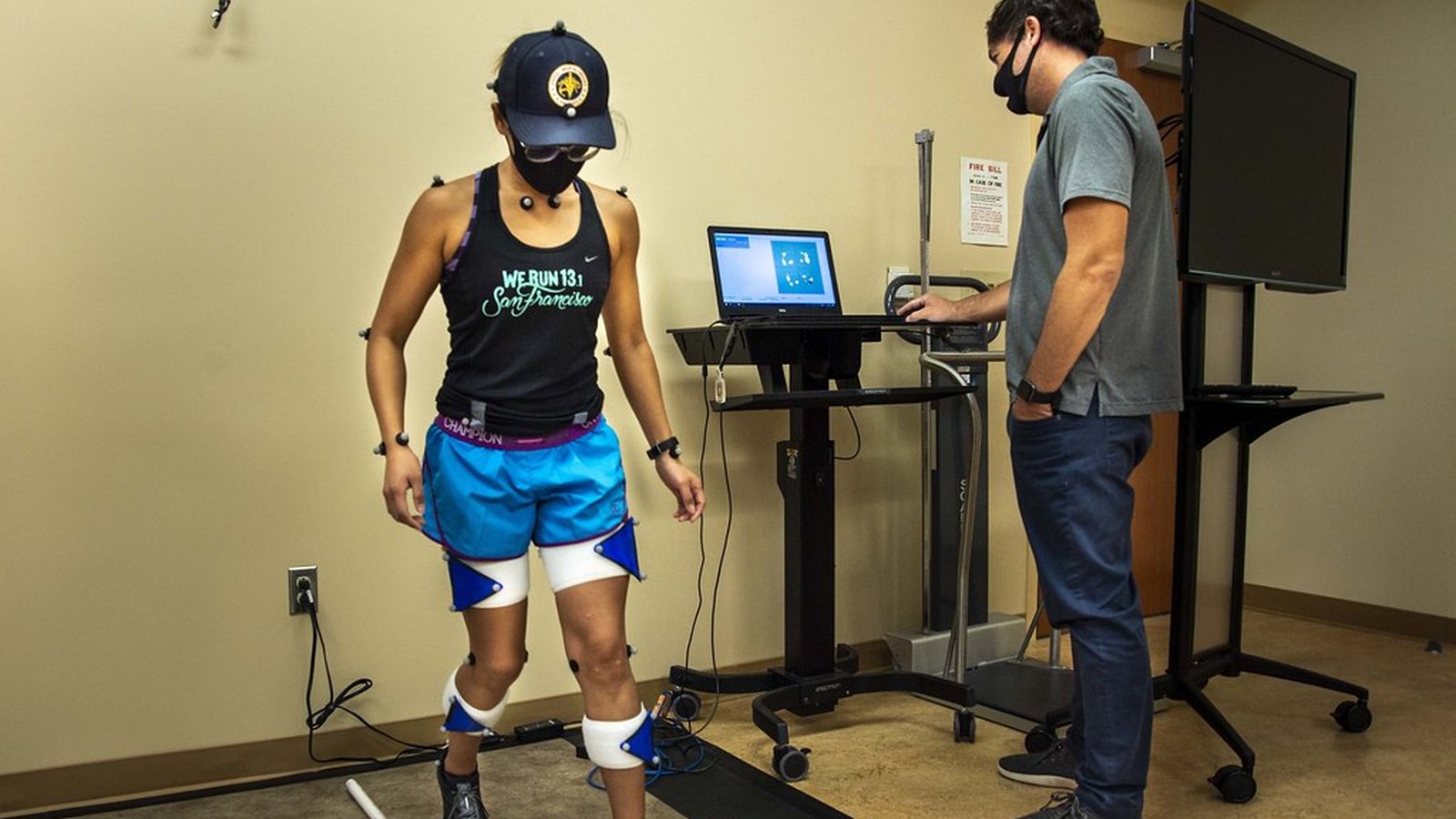
What “neuromuscular” covers
The term covers a wide range of conditions affecting muscle, the neuromuscular junction or peripheral nerve. Adults commonly seen in rehabilitation include hereditary myopathies and muscular dystrophies, myotonic dystrophy, Charcot–Marie–Tooth disease, chronic inflammatory demyelinating polyneuropathy (CIDP) and the recovery phase of Guillain–Barré syndrome, myasthenia gravis, post-polio syndrome, spinal muscular atrophy in adults, and amyotrophic lateral sclerosis (ALS).
These conditions differ in one respect that shapes everything else: the rate and predictability of progression. A rehabilitation plan that is appropriate for a slowly progressive myopathy may be inappropriate for a rapidly progressive motor neuron disease, where the goal shifts from building capacity to maintaining function, comfort and safety. The same exercise principle can therefore be appropriate in one condition and inadvisable in another.
Exercise: what the evidence now shows
For many years, people with neuromuscular conditions were advised to avoid exertion. That position has been substantially revised for slowly progressive conditions. A Cochrane review of strength training and aerobic exercise training in muscle disease found that strength training may improve muscle strength, and aerobic training may improve aerobic capacity, with the certainty of evidence rated low because of small trials and heterogeneous populations. Importantly, the review did not find evidence of significant harm in the conditions studied, provided training was appropriately prescribed and supervised.
In current practice this usually translates into:
- Moderate-intensity progressive resistance training for major muscle groups, with careful attention to technique, joint protection and recovery between sessions
- Aerobic training at a tolerable intensity, often in short bouts, which improves cardiovascular fitness and supports participation
- Monitoring for excessive fatigue or prolonged recovery — the signal that a programme needs to be adjusted rather than abandoned
- Condition-specific caution where cardiac involvement, respiratory impairment or rapid progression is present
The important qualification is that the evidence is stronger for slowly progressive conditions than for rapidly progressive ones. Decisions in ALS and in conditions with cardiac or respiratory involvement need to be made with the medical team, because in those settings the priorities are different.
Electrical stimulation and assistive technology
Neuromuscular electrical stimulation (NMES) is used both to support muscle activation where voluntary control is reduced and as an adjunct to training. It has a clearer role in some settings — for example, in supporting ankle dorsiflexion in foot-drop — than in others, and responses vary considerably between individuals. Functional electrical stimulation and, in a small number of centres, implanted stimulation systems remain options in selected cases.
Gait technology has expanded quickly: body-weight support systems, instrumented treadmills, gait-training robotics and wearable exoskeletons. These tools make it possible to practise a higher number of steps with less therapist effort and more consistent support, and early studies in some neurological populations are encouraging. The evidence base in neuromuscular disease specifically remains limited, and cost, availability and transfer burden still determine whether these approaches are practical for any individual.
Respiratory and bulbar considerations
Respiratory muscle weakness is often the main determinant of outcomes in neuromuscular disease, and it can progress before it is noticed in daily life. Assessment therefore typically includes regular lung function monitoring rather than relying on symptoms alone. Inspiratory muscle training and cough-assistance strategies are widely used in selected patients; the evidence for each is mixed across conditions and depends on the stage of disease. Where swallowing is affected, rehabilitation works alongside speech–language therapy rather than in isolation.
Gait, balance and falls
Falls are among the most common reasons for loss of independence in this population, and they are usually multifactorial: muscle weakness, altered sensation, fatigue, orthostatic intolerance and environmental factors all contribute. Effective interventions tend to be pragmatic rather than technical — task-specific balance and gait practice, appropriately fitted orthoses and walking aids, home hazard review, and a plan for what to do after a fall. Ankle–foot orthoses are frequently used for foot drop and for ankle instability, and their fit should be reviewed as strength changes.
Fatigue, pain and energy management
Fatigue is a defining feature of several neuromuscular conditions, including post-polio syndrome and myotonic dystrophy, and it does not resolve with rest alone. Energy management — pacing activity across the day, scheduling demanding tasks at the time of best function, and adjusting the environment to reduce effort — is often more useful than attempting to train through fatigue. Chronic pain is also common and is usually managed through a combination of activity modification, strengthening where it is safe, and medical management rather than passive treatment alone.
How disease-modifying therapies have changed rehabilitation goals
In spinal muscular atrophy, treatments introduced over the past decade have altered prognosis for many patients, and rehabilitation now often runs in parallel with pharmacological treatment rather than after it. In myasthenia gravis and CIDP, immunotherapy has changed the pattern of relapse and recovery, so rehabilitation plans are increasingly structured around fluctuating capacity. In both situations the rehabilitation contribution is the same in principle: measure function objectively, preserve what is present, and build tolerance where it can be built.
Measuring change
Because progression and improvement can be slow, measurement has to be deliberate. Commonly used tools include:
- Walking capacity: six-minute walk test, ten-metre walk test, Timed Up and Go
- Condition-specific functional scales, such as the Motor Function Measure in selected neuromuscular populations and the North Star Ambulatory Assessment in Duchenne muscular dystrophy
- Handheld dynamometry or fixed dynamometry for strength
- Pulmonary function testing for respiratory monitoring
- Patient-reported measures of fatigue, pain and daily function
A small number of measures used consistently over time is more informative than a large battery used once. This is also how a clinician distinguishes a genuine change from normal day-to-day variation.
Where the evidence remains uncertain
- Optimal exercise dose and intensity in each specific neuromuscular condition
- Whether exercise can modify disease progression rather than only improve function
- Which patients benefit most from robotic gait training and exoskeletons
- Long-term effects of inspiratory muscle training across different conditions
- How best to combine rehabilitation with disease-modifying therapies as prognosis continues to change
Some of these gaps exist because the conditions are individually rare and trials are small. Reading the literature in this field requires attention to study size and population, not only to the direction of the result.
Key points. Physical training is no longer assumed to be harmful in neuromuscular disease; in slowly progressive conditions, moderate resistance and aerobic training may improve strength and aerobic capacity, with low-certainty evidence. In rapidly progressive conditions and where cardiac or respiratory involvement is present, priorities shift to function, comfort and safety. Measurement, fatigue management and coordination with medical treatment are the constants.
Selected sources for further reading
- Voet NBM, van der Kooi EL, van Engelen BGM, Geurts ACH. Strength training and aerobic exercise training for muscle disease. Cochrane Database of Systematic Reviews.
- Cochrane Database of Systematic Reviews: exercise and other physical therapies in Guillain–Barré syndrome and chronic inflammatory demyelinating polyneuropathy.
- World Health Organization. International Classification of Functioning, Disability and Health (ICF).
Scope note: this article describes general rehabilitation principles and published evidence. It is not medical advice, does not contain individual treatment recommendations, and does not describe the services of any hospital.