What to Expect From Non-Surgical Scoliosis Rehabilitation: An Evidence-Based Guide
For most adolescents with idiopathic scoliosis, the first steps in management are not surgical. They are observation, structured exercise and — when the curve and growth status indicate it — bracing. This article explains what non-surgical rehabilitation typically involves, what the published evidence supports, and which claims should be treated with caution.
Why non-surgical management is usually the starting point
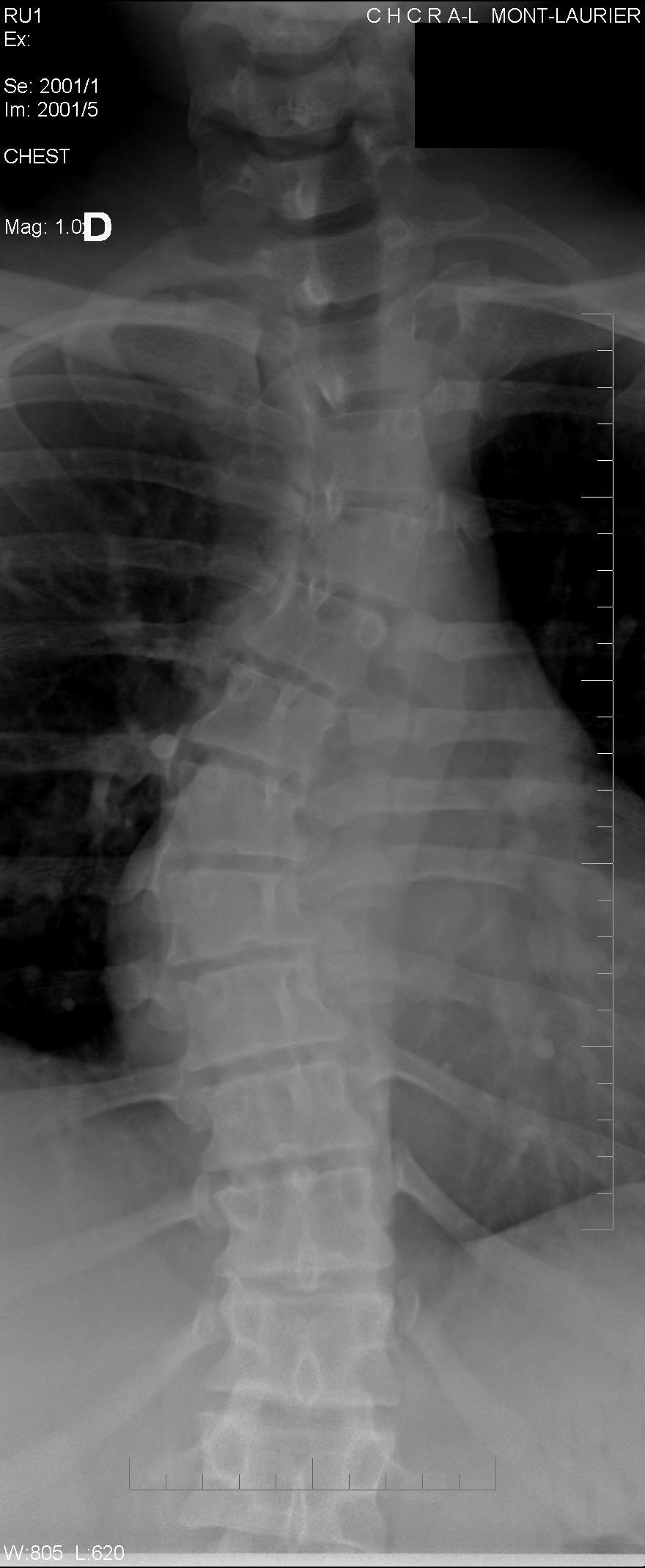
Adolescent idiopathic scoliosis (AIS) is a three-dimensional change in spinal shape, not simply a sideways bend. The main risk period is the time of rapid growth, when a curve may progress. Because of this, management decisions in growing adolescents are usually based on three things together: the size of the curve, the amount of growth remaining, and any documented change between visits. A single measurement taken on one day cannot answer the question that matters most — whether the curve is progressing.
Non-surgical rehabilitation sits within this monitoring framework. Its aims are specific and modest: to support an individualised exercise programme, to address postural control, breathing and trunk muscle activation, and to help maintain function and quality of life. It is not a replacement for orthopaedic assessment, and decisions about bracing or surgery remain medical decisions made with the treating team.
What the evidence currently supports
The picture from published research is uneven, and it is worth stating that plainly. Some components of non-surgical management are supported by reasonable evidence; others rest mainly on expert consensus and clinical experience.
| Approach | Typical role | State of the evidence |
|---|---|---|
| Observation and monitoring | Small curves in a child who is still growing | Standard clinical practice; repeated measurement is what guides decisions |
| Scoliosis-specific exercises (PSSE) | First-line conservative option for mild to moderate curves | Recommended in international guidelines; systematic reviews rate the certainty of the evidence as low to moderate |
| Bracing | Moderate curves during growth, where indicated | Better supported: a randomised trial found bracing reduced progression to surgery in growing adolescents at higher risk |
| Surgery | Large or clearly progressive curves | Outside the scope of rehabilitation; a decision for the surgical team |
Two conclusions are worth drawing from this. First, exercise and bracing are not competing options; where bracing is indicated, exercise programmes are usually combined with it. Second, the honest position on exercise evidence is that it is promising but not strong enough to support absolute promises.
What a structured assessment typically includes
- Curve measurement: the Cobb angle from standing radiographs, plus the date of each image so that change over time can be calculated.
- Growth status: skeletal maturity indicators such as the Risser sign and, in girls, time since menarche. Growth remaining is one of the strongest predictors of progression.
- Surface shape: trunk rotation measured with a scoliometer, and standing and sitting posture, including shoulder and pelvis level.
- Three-dimensional movement: how the rib cage, pelvis and trunk behave together in breathing and in active correction.
- Muscle activation: in research settings, surface electromyography can show which muscles are working during an exercise and at what level.
- Function and participation: walking, school and sports activity, pain, and how the curve affects daily life.
- Quality of life: validated questionnaires such as the SRS-22 provide a baseline against which later change can be compared.
What a rehabilitation programme usually contains
Programmes differ between schools and between clinicians, but most evidence-based programmes share the same structure. A defined set of corrective movements is taught in individual sessions, then practised at home. Sessions are usually supervised by a trained therapist, and the frequency of supervised sessions is typically low — often weekly or twice weekly — with daily practice at home.
- Three-dimensional self-correction of the trunk in standing, sitting and lying
- Breathing exercises that target the region of the rib cage affected by the curve
- Trunk and pelvic stabilisation exercises
- Postural awareness and positioning during daily activities and sport
- Where bracing is used, exercises designed to work alongside the brace rather than against it
- Education for the young person and the family, because adherence is the single factor most likely to determine the outcome
Approaches such as Schroth, BSPTS and SEAS differ in emphasis, terminology and specific exercises, but all are scoliosis-specific exercise programmes rather than general strengthening or stretching classes. General exercise remains valuable for fitness and wellbeing; it is simply a different thing from an individualised corrective programme.
How progress is tracked
Change should be measured, not estimated. In practice, follow-up usually combines the objective and the functional:
- Cobb angle compared directly with previous imaging, using the same measurement conventions
- Surface rotation and posture measurements taken in a consistent position
- Growth and maturity status, which determine how much risk of progression remains
- Exercise quality and adherence at home
- Function and quality-of-life questionnaires
The interval between reviews is usually set by growth rate and curve size rather than by a fixed calendar. Faster growth and larger curves generally mean closer monitoring.
Claims that are not supported by the current evidence
- That a specific exercise programme reliably reduces a curve to zero, or that curve correction can be guaranteed
- That manual therapy, massage or passive stretching alone changes spinal shape
- That curves can be meaningfully corrected after skeletal maturity has been reached through exercise alone
- That one method is proven superior to all others — comparative trials between established programmes are still limited
- That exercises make bracing or surgery unnecessary in every case
A programme that is presented with absolute promises is a reason to ask for the underlying evidence rather than to proceed.
When to seek medical review promptly
Rehabilitation is not the right setting for some presentations, and the following should be reviewed by the treating medical team without delay: pain that is persistent or wakes the child at night, neurological symptoms such as weakness, numbness or changes in bladder or bowel function, a curve in a very young child, rapidly visible change, unusual skin or spinal findings, or a curve associated with other developmental conditions.
Questions worth asking before starting a programme
- What are the Cobb angle, growth status and documented change over the last 6–12 months?
- What are the specific goals of this programme, and how will they be measured?
- How many supervised sessions are expected, how often, and what home practice is required?
- How will the programme coordinate with bracing or with surgical follow-up?
- What would indicate that the plan needs to change?
Key points. Non-surgical management of adolescent idiopathic scoliosis is built on repeated measurement during growth. Scoliosis-specific exercise programmes are widely recommended and supported by low to moderate certainty evidence; bracing has better evidence in higher-risk growing adolescents. Honest programmes describe aims and limits, measure progress objectively, and work alongside medical follow-up rather than replacing it.
Selected sources for further reading
- Negrini S, et al. 2016 SOSORT guidelines: orthopaedic and rehabilitation treatment of idiopathic scoliosis during growth. Scoliosis and Spinal Disorders, 2018.
- Weinstein SL, et al. Effects of bracing in adolescents with idiopathic scoliosis. New England Journal of Medicine, 2013.
- Cochrane Database of Systematic Reviews: physiotherapeutic scoliosis-specific exercises for adolescent idiopathic scoliosis.
Scope note: this article describes general rehabilitation principles and published evidence. It is not medical advice, does not contain individual treatment recommendations, and does not describe the services of any hospital.